Playlab Features TYWLS Astoria Teacher’s Collaborative Process to Develop School’s AI Policy

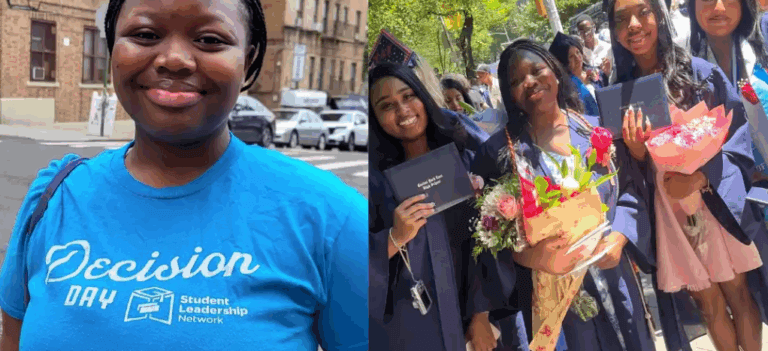
Devin Chowske is a teacher at The Young Women’s Leadership School (TYWLS) of Astoria, a school in our Young Women’s Leadership network.
He has taught at the school since 2016 and has led workshops on AI and AI policy at Student Leadership Network’s TYWLS Professional Development Days.
By Candace Sharrow
Excerpt from “This is Not a Pipe,” originally published in Playlab.ai on August 20, 2026
A New York teacher spent fifteen months building his school’s AI policy from scratch. Here are four things any school can steal from it.
When Devin Chowske launched one of Playlab’s student-facing curricula, he ripped the cutesy AI-generated images out of the slides and replaced them with René Magritte’s The Treachery of Images. The 1929 painting of a pipe is captioned, in French, “This is not a pipe.”
A picture can look real without ever being true. A language model has never needed to know the difference.
Devin is a teacher at The Young Women’s Leadership School of Astoria (TYWLS), in Queens. He’s the school’s AI Team Lead, a title that didn’t exist two years ago.
He and Principal Allison Persad led their school community through the process of writing a full AI policy from the ground up. The working group produced a 25-page living document with separate guidance for students, teachers, and administrators, a framework for disclosure, a deepfake policy with teeth, and an entire appendix structure.
The Process
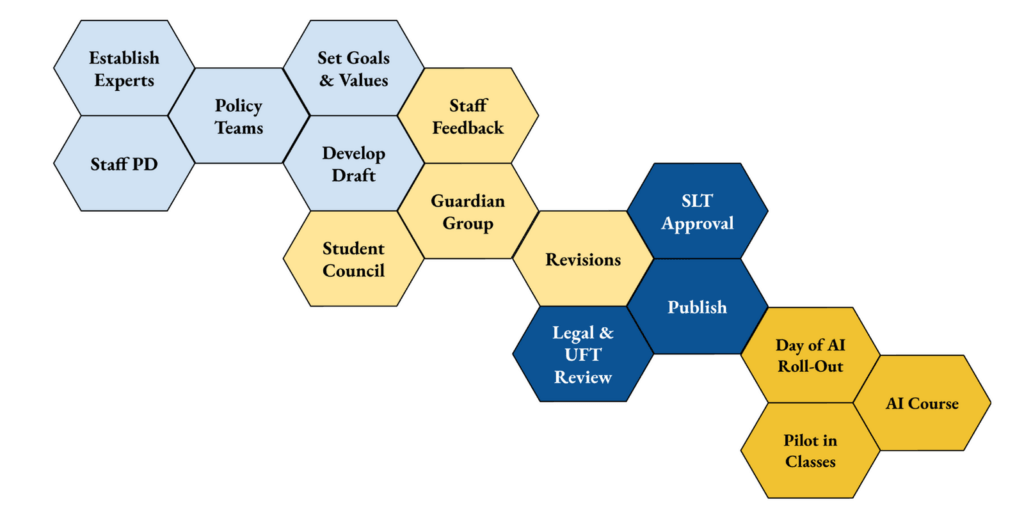
Devin, Allison, and their team spent fifteen months building this policy, moving through fifteen nonlinear steps. They started by listening—to teachers, families, and students—then built a draft from what they heard, then ran it back through those same groups for pushback before it ever reached legal review or a leadership vote.
One student, an artist, told Devin early on that she hated AI. When he pushed gently, she didn’t object to the technology itself. She was not against AI for any reason other than that she believes in the worth of self-expression—brainstorming, spell-checking, finding the rhythm of language, she said, are all skills an artist has to develop, not skip. No use of AI, to her, would ever be worth it.
A second challenge came from inside the AI Student Policy Council. An early draft leaned on existing citation standards, treating AI policy as an extension of plagiarism policy. A student pointed out the flaw—citation only means something if someone can go back and check the source, and at the time, sharing a full AI conversation required a paid subscription most students didn’t have. Built that way, the policy would have barred anyone who couldn’t afford it from using AI at all.
Resources
- View TYWLS Astoria’s AI Guidelines
- View TYWLS Astoria’s collaborative process