Accepted, Now What? CollegeBridge’s Near-Peer Program Increases Enrollment and Persistence after College Acceptances
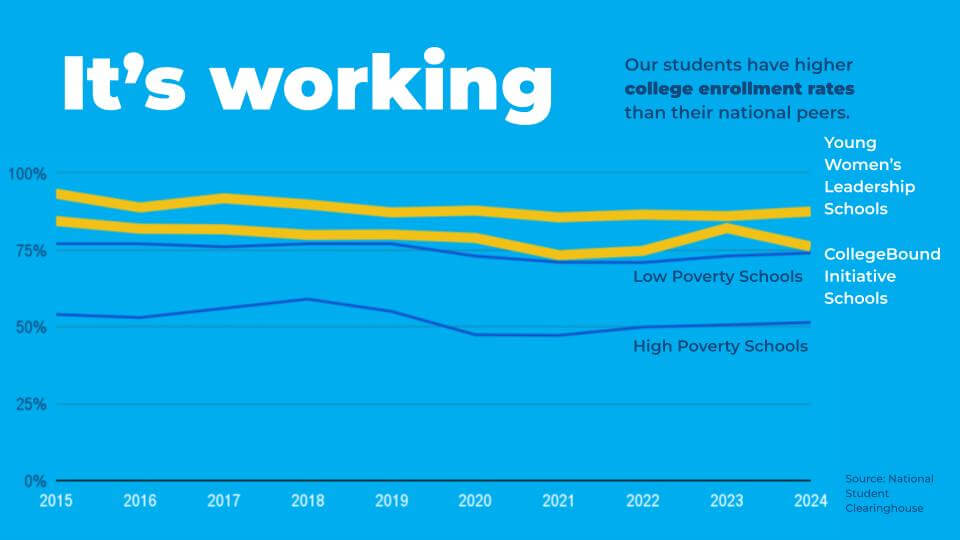
After the excitement of earning admission to college and choosing a school, some students are surprised to learn the process doesn’t end after college acceptances and high school graduation. Student Leadership Network’s CollegeBridge program helps prevent a phenomenon called summer melt, where students accepted to and planning to attend college end up not enrolling for a variety of reasons. Our College Persistence team supports our high school alumni in navigating college matriculation (enrollment in college) and persistence (continuing enrollment to the next term). This work has boosted college persistence among our students by over 10%!
Nicole Meyer, Manager of College Persistence, trains College Transition Coaches (CTCs) to provide one-on-one support to graduates of our partner high schools. She and Makula D., one of our CTCs, share insights on the matriculation process and tips to help students start college on time.
Outside of academic and financial aid processes, what parts of the college process most often catch students off guard?

Manager, College Persistence
Health Insurance Waivers
Nicole: Many students don’t realize they are automatically enrolled in their school’s health insurance plan and billed for it unless they submit a waiver by the deadline. To waive the charge, students must already have health insurance (for example, through their parents’ health plans) and provide documentation of their coverage. If a student misses the waiver deadline, the charge will likely stay on their account. Depending on the institution, that health insurance can cost anywhere from $1,500 to $7,000, which can leave a significant balance. An unpaid balance can lead to a financial hold, which prevents the student from registering for classes. What starts as one missed deadline can quickly snowball!
Orientation is mandatory, not optional.
Nicole: Most students don’t realize that orientation is required. Many colleges hold mandatory summer orientation sessions for new students, and students often register for classes during this time. Missing orientation can create another snowball effect: the student may be placed on an academic hold and won’t be able to register until they meet with an academic advisor. Knowing your orientation dates and attending are essential.
What is one thing you’re proud to have helped students understand about the college process?

College Transition Coach,
Student at CUNY Queens College
Academic Degree Maps
Makula: I taught my students about the beauty of academic degree maps. As incoming freshmen, they were sometimes unsure which classes to take and how to stay on track for the next two or four years. I showed them that colleges and universities have already taken their concerns into consideration by making academic degree maps! These documents provide a detailed, semester-by-semester map to follow and are a basis for scheduling decisions. I encouraged them to look up the academic degree maps for different majors they’re considering and to structure their classes based on that research.
The Reality of Indirect Expenses
Nicole: Beyond tuition and fees, students also need to pay for books, school supplies, transportation, and other everyday costs such as lunch or cell phone bills. If you haven’t budgeted for those costs, they may come as a surprise. I reminded students about these indirect expenses that don’t necessarily appear on the college bill, so they’re easy to overlook. It is important to pay attention to how expenses add up in their budgets. One small misstep can contribute to summer melt.
What advice would you offer to high school students who are starting college applications?
Check Your Email Daily
Makula: Definitely read their emails! Scholarships, opportunity programs, and fee waivers are all wonderful things that can change your life. However, they come with deadlines and specific instructions. To ensure students don’t miss great opportunities, I urge them to check their inboxes regularly and read messages thoroughly.
Get and Stay Organized
Nicole: Manage the college application process; do not let the college application process manage you. The key is to get organized early and stay on top of deadlines, requirements, and requests. With information coming from so many different directions, the process can quickly become overwhelming without a clear system in place. Students can set up an online tracker in a Google Doc or Sheet and set key reminders in their email and phone calendars.
As an alumna now returning to work with students, what do you find most rewarding about being a CTC?
Makula: One thing I enjoy about being a CTC is being surrounded by so many ambitious and passionate people! Whenever I hear about my students’ aspirations to better themselves, improve their communities, or bring change to the world, I feel motivated to do the same. To me, being a CTC means having a reciprocal relationship with my mentees. I get to teach my students about young adulthood, and they remind me why that period in life is so special.