Why Do Colleges Need My Tax Forms? Guiding Families Through the College Application Process
What is a parent or guardian’s role in their child’s college application process? While Student Leadership Network’s CollegeBound Initiative team works most directly with high school students, they also inform, educate, and counsel families throughout the process. Our Directors of College Counseling (DCCs) and other college access staff offer practical advice to help caregivers support their children’s aspirations for college and beyond.
Learn About the College Process at Family Nights
Early and steady exposure to college builds expectations and knowledge that come to fruition in a student’s senior year. Our team supports parents and guardians in being active partners in helping their children make informed decisions about their futures.
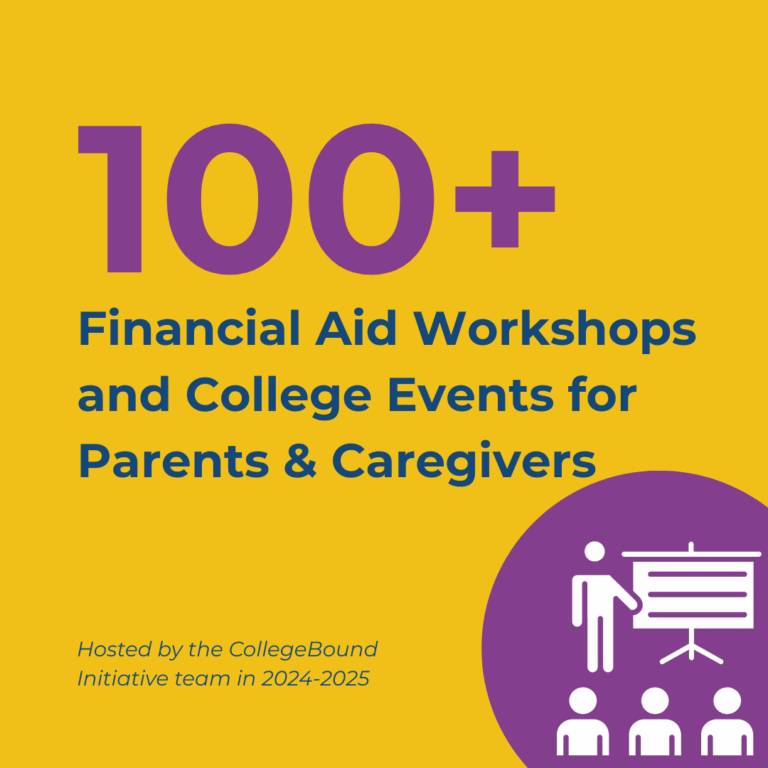
Our CollegeBound Initiative team hosted 100+ financial aid workshops and college events for parents and caregivers last year.
- Attend Parent College Nights at your child’s school. DCCs host informational family events to provide an overview of the college process and key milestones and deadlines. They often schedule events in the evening to accommodate working families’ schedules. Meeting fellow parents and guardians navigating the process can make it feel less overwhelming, especially for those whose children will be the first in their families to attend college.
- Sign permission slips for your child to go on college trips. College fairs, day trips to local universities, and overnight trips to out-of-state campuses offer students a variety of environments to explore and give parents the experience of having their child away from home. For some students, this may be their first overnight experience away from home, and families often feel reassured knowing it will be in a chaperoned, safe environment.
Keep Track of Application Documents
Checklists are your friend! For transparency and consistent communication, tracking required documents and timelines will go a long way toward successful applications and securing financial aid.
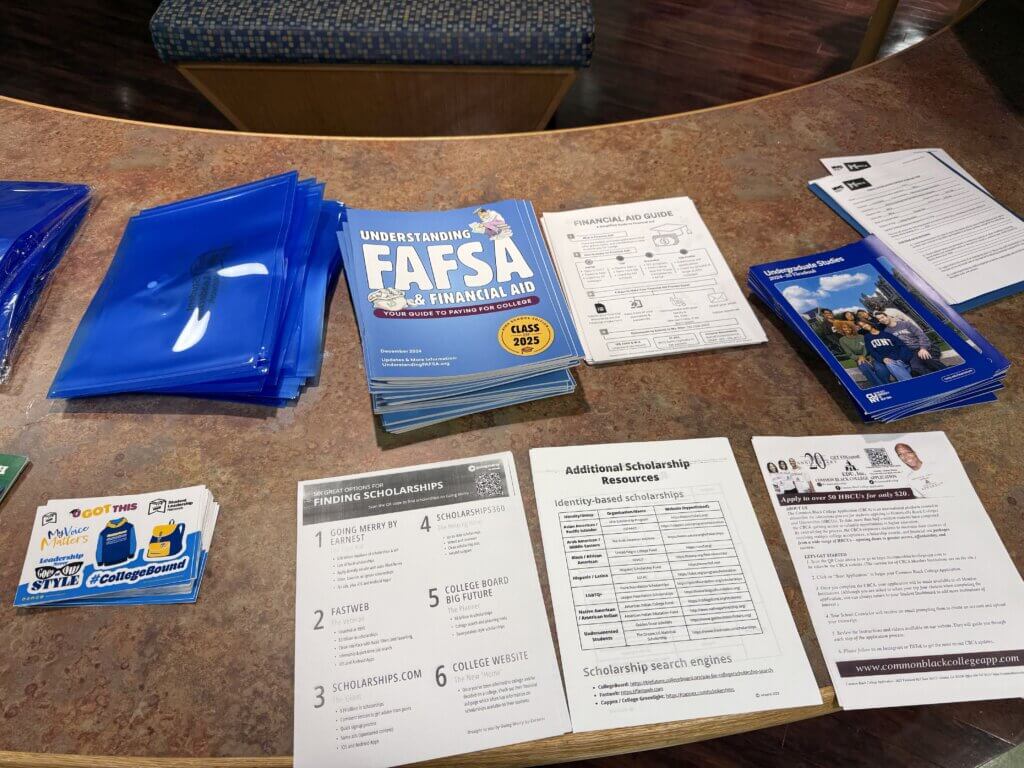
Financial aid checklists for families 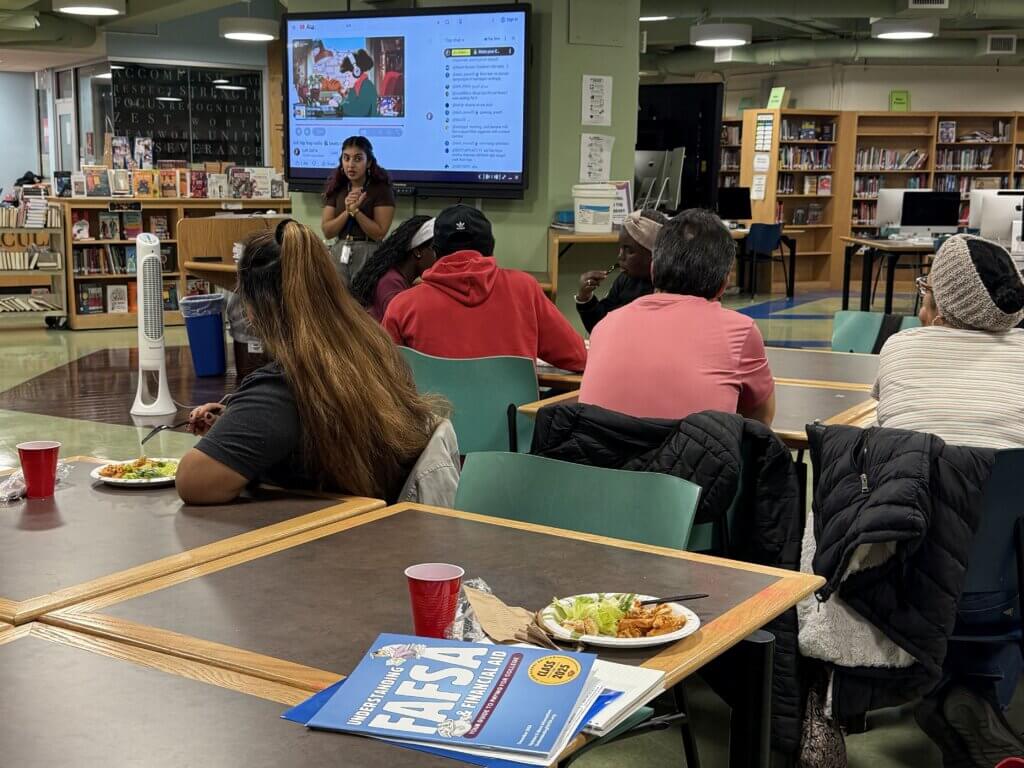
DCC Ciara Diaz hosts a family financial aid night
- Use counselor-vetted digital tools to keep track of research, application timelines, and required documents. Various websites and apps may allow caregivers and students to create separate accounts to research and compare costs across traditional, technical, and trade schools. Some apps offer practice accounts for adults to track deadlines and review application components to see what students need to complete. Check with your school’s DCC for their recommendations.
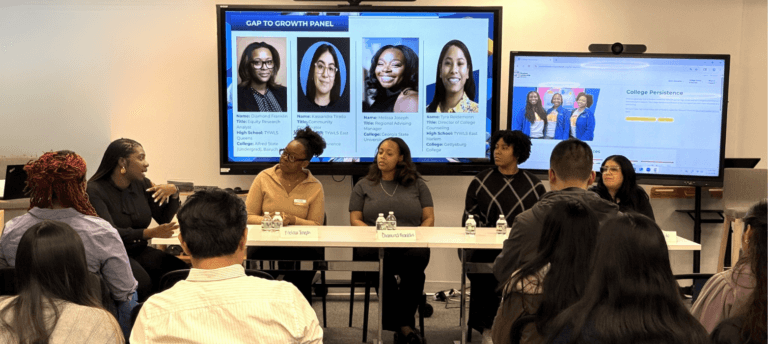
- Attend financial aid workshops at your child’s school. DCCs explain common financial aid terms and provide one-on-one support and troubleshooting. At Manhattan Early College School for Advertising, DCC Ciara Diaz hosted a bilingual family financial aid night, where families received guidance on setting up their Free Application for Federal Student Aid (FAFSA) accounts and navigating income documents. When one family expressed concern about a change in income, Ciara reassured them: “There is a process to appeal financial aid packages and explain a change in circumstances. I’ve seen students secure anywhere from zero to $10,000 in additional aid. We can also look for merit scholarships and school-specific opportunities on your college list.”
Understand Family Dynamics that Impact College
Our DCCs understand that cultural expectations or family obligations may influence students’ college decisions. Some students may have caregiving responsibilities or face gendered expectations that keep daughters closer to home, which may limit their college search to local options. Others may be expected to contribute to household finances, which may affect their assessment of financial aid and work opportunities. Some families are uncomfortable discussing finances with their children. The collaborative process among college counselors, students, and caregivers helps families navigate these issues, enabling students to make informed decisions about their futures.
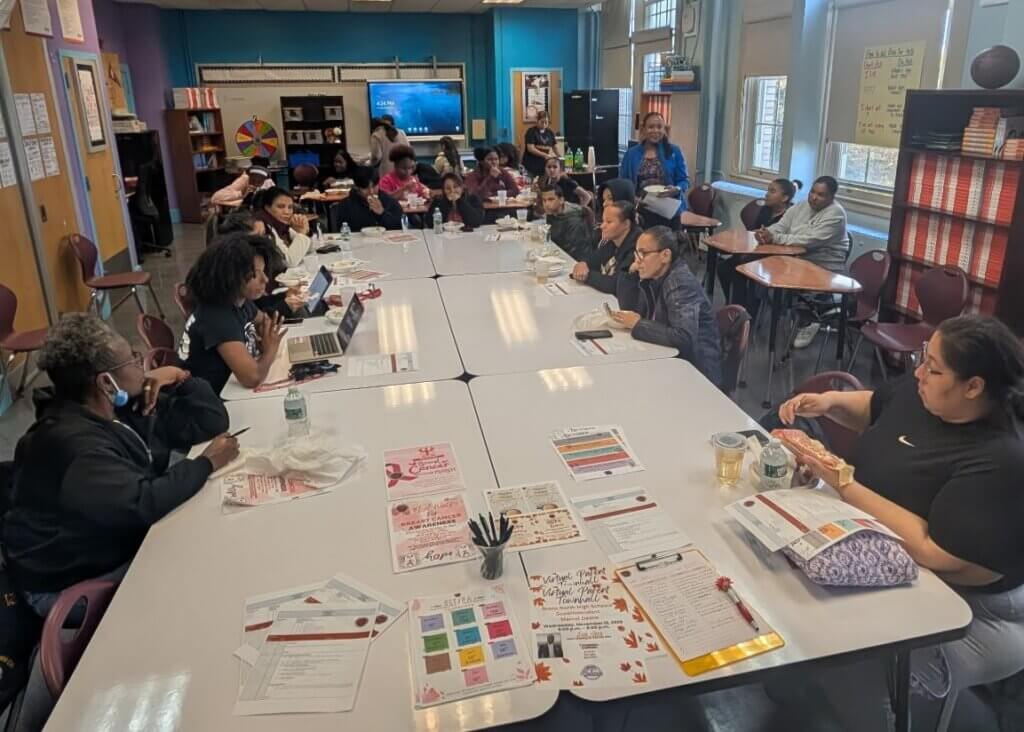
Family financial aid workshop hosted in English and Spanish 
Senior Families Night at TYWLS Queens with DCC Neonne Ameer
- Normalize talking about family finances with guidance from your school’s counselors and college access staff. Gathering W-2 or 1099 income tax forms, bank statements, and other financial aid application materials can feel daunting, especially if families are not used to talking about money with their children. “I tell parents all the time, when students ask for tax forms, they’re not being nosy. This is part of the process to get funding for college,” shared Carolina Moquete, Assistant Director of College Access & Professional Learning. “We don’t expect families to understand everything about the financial aid application process, especially if this is their first child navigating their post-secondary options. That’s why we’re here to help the students and their parents along the way.”
- Counseling families includes discussing pathways aligned with the student’s best interests and identifying areas for compromise. Counselors partner with families early and often to understand household dynamics and support students in advocating for themselves. “Students do not need to automatically become the second or third adult in the household once they graduate high school,” shared Neonne Ameer, DCC at The Young Women’s Leadership School of Queens. “I remind them that students have a role as students, and pursuing a post-high school plan of their choice will take them further than they may expect. We look at all of the options for their education and growth.”
Learn more about the CollegeBound Initiative and see if our services may be a good match for your high school!